Showing posts with label Suffering. Show all posts

Sunday, September 17, 2017

Riding the Waves


“And when He got into the boat, His disciples followed Him. And behold, there arose a great storm in the sea, so that the boat was covered with the waves; but He Himself was asleep. And they came to Him, and awoke Him, saying, “Save us, Lord; we are perishing! And He said to them, “Why are you timid, you men of little faith?” Then He arose, and rebuked the winds and the sea; and it became perfectly calm. And the men marveled, saying, “What kind of a man is this, that even the winds and the sea obey Him?”      

Adversity, by its definition and very nature, is an “attack” on whatever is foundational to us. When significant aspects of living become lost to us, a part of us is lost. Alas, we have no magic wand to compensate for whatever undercuts the fragile footage of life.

Beloved faces are swept beyond our touch by the ravages of death or the failures between us. Or a job disintegrates—the livelihood that was our “outer garment,” perhaps worn a bit thin at the elbows, but still part of our daily pulse, our daily bread. Or the very roof above us, our shelter and part of our identity—that which grounds and shapes us in community—is taken from us, swept away by nature or the "nature" of economics. Even losing a small accumulation of treasures that remind us who we are, where we have been in life, and who has been a part of it—even this may be a grief. A greater loss, our health—immobility, psychological problems, various afflictions that threaten our very life or bring devastation upon us and those around us. And always, the non-corporeal scars, our invisible wounds: the loss of dear ones, or the deep sickening that others’ betrayals lay upon us  . . . the robbing of our very soul. Any of these, and more, may defeat us. Grief is utterly personal, and our hearts sometimes break for reasons that seem inadequate to others. So, adversity brings to us "loss" in some form.

"Sweet are the uses of adversity..." says the bard. We do not ask for them. They are hard “gifts,” after all. We humans, who by nature cling to whatever we deem as desirable, as good, perceive the harsher blows of life as a seedbed for more bitter fruit of such kind. Passion fruit does not spring from poison oak.

And so true adversity (as opposed to the “setbacks” that fret us) is not “useful.” It does not offer solace, redemption for what is torn away, repair of the irreparable, comfort and bedding for the plundered psyche. Adversity is a great shadow that passes slowly, inexorably over us, stripping all that it touches—or a tsunami that strikes quickly, leaving a wake that leaves us breathless. We cannot fathom, cannot see beyond it.

We are set adrift in rough and alien seas, flotsam around us, flotsam within.

But consider this: Jesus rode upon that sea, in a teetering boat—asleep, incredibly, in the throes of a violent storm. The disciples, paralyzed with fear, wakened Him. The rest is history: the Christ who lay exhausted among them, weary human that He was, woke up—and rose  up—to a stature that engulfed the chaos threatening to engulf them all. He spoke into the implacable deafness of wind and water . . . and the roiling was stilled, within Him and then around Him.

Jesus doesn’t ride in our leaky boat. But . . . but, He does—if we see Him there. No, He’s not holding that fabled magic wand. He is holding our lives, lifting us—that fragile essence of us—above what threatens to engulf us.

When we see Him, when our interior eye is refocused, life itself—all that is our life—rises with His hand. He absorbs our adversity. He contains it, constrains it—prunes it down to a size we can endure. The thrashing wind and waves, our utter brokenness. He enfolds it all, bearing witness to YAHWEH’s timeless Truth. Not fact, that barren word!—but to the indefinable, immutable Life Energy, the outflow of His Authority, which keeps us, succors us.

This is sustaining Truth that we can live with and live within: Love, life, endures. No—more than endures! It’s not that He will rewind or resume the reel of our days and ways for us, move things along the familiar track, patch up our humpty-dumpty hulls. No, that’s not what endures. What we discover, slowly or in a flash of intuition, is that because He is unlimited of scope—that He once and forever rose above the violence of waves, above His own small earth-personness, beyond the loneliness of loss and sorrow—so may we. He has not perished. Nor shall we. 

He gathered up the storm and silenced it. He will gather up our storms. A silence—a release—will come. Not in the margins of our being, but the center of our seeing.

We have loved deeply and suffered deeply, or not been loved and never flowered with passion for life—a sorry seedbed indeed. But both poverties are drawn into His own sudden rising, still numb with exhaustion, His springing from a troubled slumber in the hold of that small ketch, stretching to the inner height of Heaven . . . .

He reigns there, commanding the darkened sky—containing, before our startled eyes, the uncontainable. Controlling within our ravaged souls the uncontrollable. And within Him are stored our hearts’ treasures—those we have known and lost, those we never truly recognized, and those—ah yes—those not yet bestowed that He holds in custody.

For this, all this, we may fully live again. 

~Judith

Friday, February 17, 2017

Seeing Sideways


Originally posted on the Ruminate Blog on 1 February 2017: "Seeing Sideways"


It was raining again when I walked out of church—a slow spritz that would invoke a guffaw in the saturated NorthEast. But in California it was, Oh yay, rain! I smiled, raised my umbrella, and headed across the street.

And I saw him standing there. Facing the church, holding a ragged cardboard "help" sign. My first thought: Panhandling, of course. He knows how to 'guilt' people! Get them coming out of church, stoked with a good sermon on 'doing unto others.'  But he was directly between me and the parking lot, and to evade him would have looked obvious. Yeah, evasive. We know it well.

So I walked directly up to him. I was almost surprised to look into the face of someone as alert and "normal" as other folks zigging past us. Not one of the usual street people. His eyes were intensely blue, clear, observant—the word benevolent occurred to me. Strangely, because he was seeking our benevolence. Here he was, slightly shivering, damp and uncovered, and he might have been handing out bonbons or tracts, for the look on his face. 

Not a tinge of down and out.

"Hi, my name's Jerry.* I'm an ex-Marine, on disability, and the checks quit coming. I'm trying to get through the legalese and straighten it out. I'm supposed to have more surgery." His declaration was quiet, well-modulated. He stopped and lifted the cuff of his knee-length khakis. His leg was distorted, and a thatch of scarring ran from ankle to mid-thigh, where it disappeared under cover. He looked straight at me. "Afghanistan. I survived. Got patched up, discharged. And lost my home, lost my address, pension, medical . . . lost it all." It was matter-of-fact, direct. "I need a bus pass to go get help. A monthly pass—so I can go back and forth and deal with all the government paper work and stuff."  He explained it all carefully, his reason for asking.

"Where are you staying?" He obviously wasn't rumpled and unbathed, unshaved.

He gestured behind him. "Oh, there's a shelter a few blocks down. No computers, nothing but a free bed. Me and 250 other guys." He smiled ruefully. And then he grinned. That surprised me—the way he shrugged off the hardship of his predicament.

"God knows where I am. The bus will take me where I need to go." He said it quietly, carefully. He was watching me closely.

And I knew: He was a believer. Jerry came to us, to believers—not complaining, but directly presenting his need. Directly focused on what we could do to get him through. Our brother.

We talked a bit more about that—the Connection. I dug in my wallet and handed him a small wad. My husband came by, assessed the basics and added another bill. A sister scurried over, carrying a jacket, and helped him into it, adding a bright purple "girlie" umbrella and a quick hug. We all laughed at "purple." With a suddenness that amazed me, we were a small, brief family—HIS people standing there, damp and undampened by weather or "whethers." It was a meeting of Minds, of mindsets that were timeless, that were set in Place, in focus, over 2000 years earlier.

This man wasn't a beggar wheedling. He was our brother, setting himself before us, whole and broken, trusting in our broken wholeness. Jerry was our unfamiliar friend who needed a daily ride to the right place for the right reasons.

Because God knows where he needs to go.

Our adult class this morning focused on indifference: What it has done to the world we live in, to the people we live with—nearby or distant. The Jerry's of our world have been defeated by indifference. By bureaucracies that regularly ignore/avoid too many "Jerry's." By nations preoccupied with real or supposed exigencies, and cities that have grown apathetic about the "dregs of humanity" that litter their sidewalks and make everyone uncomfortable simply by being. And we, by our preoccupation with the nitty-gritties of our own lives, and yes, by our own care-less-ness. I have often been guilty.

The Good Samaritan comes to mind here. His inner eyes weren't focused on his own pending situation—the why's and wherefore's of his journey, the occupation and preoccupations of purpose. The man, a pariah himself, had "sideways vision" too.

He checked the ditches, walking by.

The things that compel us, distract us, attract us, and fret us—these effectively bind our larger thoughts, blind our wider vision, dim our compassion, our rightful determination. The barriers to our benevolence. We do not clearly see the peripheral "other." Not really. Only smelly, messy, chronic, dysfunctional other. We measure lives by what they have become, and seldom wonder how they got "there," how their lives unraveled, how the right people crossing the street at the right moment (one infinitesimal example) might have changed the outcome.

We overlook the poverty that hovers over the Appalachia's, the dead-end tenements in too many cities, the hovels adjoining crop-fields, the wretched encampments that metastasize beneath freeway overpasses and spill onto our urban avenues.

And the why's and wherefore's escape us. The endless poverties spin on and out―all for 
the want of a horseshoe nail.**

For want of a nail the shoe was lost. 
For want of a shoe the horse was lost.
For want of a horse the rider was lost.
For want of a rider the message was lost.
For want of a message the battle was lost.
For want of a battle the kingdom was lost.
And all for the want of a horseshoe nail.

"For want of a battle the Kingdom was lost?" Yes! Yes, it was, is that. His Kingdom lost.
Indifference is the missing nail. We fail to see sideways, and then perceive attentively, the deteriorating state of humanity—the poverty, home-grown and world-wide. Here, it has become simply a familiar backdrop to daily life. Across the barrier of seas, the tide of refugees rises and never wanes. It begins to engulf everything.

When humanity is ready, ultimately, to fight the right battle, to face the inner myopias, to call out—cry out to see through a glass less darkly, to wage peace against the war within and with-out . . . HE will raise us up from the dust of our ploys and pretensions, from the honest griefs and struggles that engulf us. His Kingdom will take shape before us, finally, our eyes clear-seeing.


This is my ultimate "take-away" from a brief encounter with Jerry, a solid-wounded man standing  in a drizzle on the curb across from where I worship. Where I head every Sunday to celebrate and petition the GodMan who sees everything—sideways and inside out. 

Everything.

The One Who rescues because He lay flayed and splayed in the dirt, finally, before the nails—helpless and spat upon. The Rescuer whom we abandoned at the cross. Who comes to us over and over to heal both our abandonment and abandoning, to awaken us, His hurting and hurtful world. To save us from this long indifference.

HE knows where and who we are, each of us. He will take us where we need to go.

                                                            *          *          *

*Name changed for the sake of privacy.
**This ancient proverb, in various forms, has been quoted and repeated for varying uses over the centuries, particularly in Early English writing. Benjamin Franklin also made note of it.


Thursday, January 26, 2017

Poem: Road out of Aleppo

Photo of Aleppo courtesy of Asia News

Road out of Aleppo

Watching the evening news

He trudges along in broken step, pale
face frozen in a blank stare,
and all the long, long river of moving
bodies pass him by. Even the frail move
faster, framing him against their blur
of anguish, like a film that runs slow
motion, etching one small centerpiece
against the screen of the unwilling eye.

Upon his backas if coupled there,
ribs fused to ribsrides an ancient man,
more skeletal than fleshed, skull
rocking gently, rhythmically, arms
crooked absurdly over the hard-set
slope of shoulders, hands snatching at
the brittle air. Thin-stick shanks dangle
loosely over the young man’s arms,
bob against the plunge and stagger
of his legslike metronomes that pace
the broken angle of each step.

Still they come, he comeslike a crab
caught in an unremitting tide
this strange, two-headed creature
all its own, with its four unseeing eyes,
its single haunted soul. An awful
metamorphosis, a horror that we cannot
look upon, nor speak of, nor forget.

And still they come, inseparable,
inexorable, the dying and the young―
a ghost that rides the shoulders of the world.

© 2017 Judith Deem Dupree 

Monday, September 19, 2016

Boulders and Rubble

Photo courtesy of Pixabay
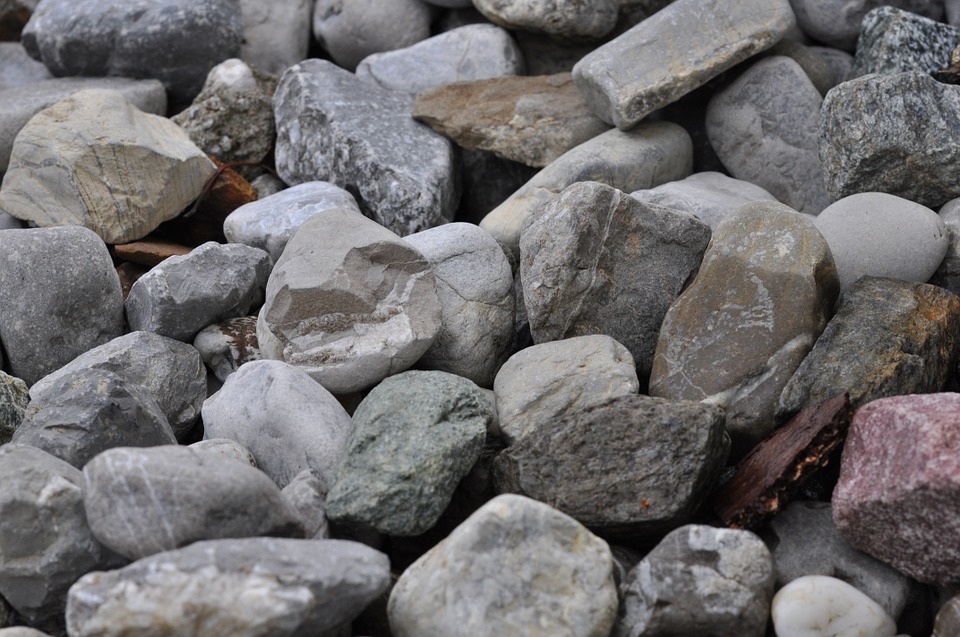
There are rocks in the path ahead. Boulders and rubble. Literally, and yes, even more so, "figuratively." Lots going on today that we cannot get around, shove aside, ignore-and-it-will-go-away. Immovable objects and objectives, imbued with a dreadful lack of objectivity. Harsh, abrasive surfaces, adamantine interiors, often with a deep gash as ugly as sin.

Dark presence that blocks the light, a heaviness that dooms.

Jesus said, "Upon this rock I will build my church...."  But this is not the Rock of Our Foundation we're talking about. There are many worthy Rock Churches across our land, with steeples and pews and ardent worshipers. They know what I mean. Theirs is the "spiritual" Rock that Peter represented—the BedRock of faith we stand upon beyond the shifting sand.

No, the rocks I'm facing are implacable impediments embedded in the psyche of humanity. Rough, gnarly rock. A shapeless boulder that stands in our way—a formidable barrier, a deadly weapon even. This becomes church? Those dark schisms between them that has and them that wants? Or a gathering-up of the chunks of scorn that almost scarred the infamous woman of ill repute, that wretched soul who stood before Jesus? Or the hail of stones that robbed the disciple Steven of his very life? These are missiles from that quarry from which humanity has ever gathered lethal  weaponry. All shapes and sizes, formed of that magma of mankind's dark and dangerous hates and lusts. Rocks and boulders that burst or burrow from the caverns of hell. These, the blasphemies that settle deeper with the broken soul's every shudder.

And into this "mine field," this death trap of varied persuasions and aversions and perversions, comes the Son of God, in sandals. The One Who spoke the violence of wind and waves down to a whimper and a ripple. HE knows what each rock is, what seeded the silica and soil and sealed the ancient strata of violence and vengeance and vanities.

He is His Father's Son; He can speak to the rock. All the ages sealed within will hear. He can strike the rock. And bring forth Water.

We can only whisper the word, the fear, the dread, and point. He will follow our finger.  This too is the beginning of Church. Selah. 

Sunday, May 8, 2016

After Resurrection

Photo from the public domain

The morning after my mother died, a sparrow crashed into our large picture window. I rushed outside and stood looking down at it—a rumpled little female sparrow, her dangling head and convulsed feet and splayed wings telling the truth. One more small heartache.  I bent and picked her up, Dead. Except, when I folded her gently into my shaky hand, I felt a slow, frail  thump against my fingers. Her heart had not yet quit. I could not lay her down, could not give her up. For several hours I cradled this little body, stroked the twisted neck, untangled the  claws, folded the wings. Sang to her . . . and walked blindly through my chores, holding her close.


My mother's heart had beat slowly like this, a small, persistent thud-bump, a metronome, for days beyond the dying of her self. Now I had to wait it out, walk it through again, for reasons that I could not formulate.


At the end of a long morning, birdie suddenly stirred against my palm. Her eyes flicked open, shut, open, staring at me. No fear, simply "Who are you?" I talked to her softly, ran my finger lightly down her neck, and felt the sudden strength that straightened it. At that moment, Life was the sparrow and me, breaking through a barrier. There was nothing else. She wriggled suddenly, and I turned her over, stroking her disheveled back. Holding her just loosely enough to give her wiggle-room.


We walked around the yard thus while she squirmed, cocked her head, surveyed the landscape. I took her into the kitchen, slipped her gently onto the table.


At first she simply huddled there. And then, in a beautiful slow motion dance, she began to practice the patterns learned as a hatchling. Doing push-ups, getting the kinks out, maybe. Strengthening her matchstick legs—those springboards to a good takeoff, which every flying critter needs. Up and down, toenails gripping the tablecloth. She swiveled around now, perfectly content to use my table, my kitchen, for her pre-flight maneuvers—stretching her wings, nodding her head elaborately, like a dancer receiving Bravo's.


Slowly I reached, cupped her in my hand again without her protest, and carried her out on the deck. And then I heard it, for the first time: from a nearby pepper tree, a frantic bird call. A sparrow, of course, over and over, a small, shattering lament. I knew. Birdie knew.


I put her on the railing. She shook herself heartily, leaned ahead and cocked her head forward, one last time, like a runner at the chocks. Off she went, dipping a bit precariously . . . and then, and then she soared. A grand flutter of leaves high in the pepper, a raucous duet. Home.


Resurrection. A trail of tears that comes to an "impossible" end—Life renewed at the end of end. And yes, my frail little mama was Home, I knew.


A strange way to say miracle. But we always need new language, new framing for the housing of our hopes. For the phrasing of our falling and our rising. We too soon forget. That's what has happened, too often, too ubiquitously, to Resurrection. It's too often buried in the tomb, having died a thousand-thousand deaths by the hands and words . . . and yes, the hollowing of messengers who speak by rote, who have never fallen, broken by life . . . and soared.


Before we make that final plunge into the unKnown—that precarious, breathless, extravagant  dip and rise upon sudden wings—we are granted many a rehearsal, many an encore. Learning to live fully and die often. Little deaths: a sudden snap between the synapses—ZAP!—and eternity breaks loose in the sludgy soul, the bloated brain, the brittle heart, and something new comes forth. A small, bare death, and a delicate cell of Truth is born, unfolds, flowers. An "Aha!" A new perception out of the muck of our last thought. The act of Genesis again. And ever again. Unending. That possibility which proves the impossibility of impossible.


Where we are called to live . . . in all the small and untidy and heartbreaking places.

Friday, April 22, 2016

What Nature Teaches: On Suffering and Steadiness

My "neck o' the woods" -- photo by Judith Deem Dupree


Originally posted on the Ruminate Magazine blog on May 8, 2015

You may view the original blog post HERE.


I live in the southwest, or, more particularly, the far southwest corner of this great, rugged-ragged hunk of earth―where it ends in an endless seascape. It―San Diego County―is an unordinary panorama, with its potpourri of terrains and neighborhoods and breathtaking shorelines.
Further inland, beyond the continuous clots of habitation, a long, slow rise unfolds―undulating hills and creviced valleys peppered with flocks of live oak and manzanita, strewn with sage, the “heather” of our terrain. And yes, this nearly-uni-season haven―daydream of many an east coast “survivor,” is also an ongoing, four-season lesson in durability and fragility…endurance and defenselessness.
Some days ago the wind lashed at us again: It comes as a thief, a wild beast racing free, pouncing, devouring, sucking the lifeblood from all things green, sucking the soul from life. Conjuror of fiery death. Santa Ana, they call it. Or devil wind, appropriately, breeder of fire. Oh, they are not frequent, but once a lifetime is many times too often.
We who live in the sprinkling of small villages that cling to the backcountry hills―savoring their timeless simplicity/eccentricity―have learned to live with our ears tuned for this telltale roar. The howling voice of nature gone insane.
In one of these fires, a friend lost everything but her life, and nearly thatShe has written a book that takes us through the fear, the horror that she experienced―and deaths too grisly to describe, too near and known to forget. Ultimately she has come into abundant life. The transformation from victim to “victor” was not, of course, quick and easy. But today she celebrates the new radiance of living, and we feed upon the richness of her testimony! (You may check out her book, The Fire Outside My Window, at her website: sandramillersyounger.com.)
Twice through our years here I have been paralyzed with such fear, watching the great trees beside (and fringing) our house groan and teeter with their incessant whipping, felt the crescendo of crashing limbs upon our shattered deck, inches from our windows. I have seen the dark bloom of smoke on the near horizon, the way it flares to crimson and consumes the sky. I have coughed incessantly in the acrid air. (And yes, we have fled, wisely, when the wind turned its dark face toward us.)
And so I have become, gradually, both “tenacious and tentative.” I have forged something akin to strength, to endurance―qualities I never claimed, never fully understood.
Nature teaches us such stern lessons: Seek its beauty, solace, incomparable inspiration. Memorize and celebrate its great and small particularities―treasures beyond description, beyond the artist’s brush or camera lens . . . and carry them lightly. Holy sustenance. Let them “feed the stream” that feeds us, that balances us when all the smallness and dailyness, the shriveledness of life closes us in. That gives us breath when we are sour with despair.
That teaches us, over and over, to inhale and release. Love and let go.
Now each sunrise and sunset that my friend experiences upon that once fiery mountain is a radiance of a new sort. The gift of endurance and its wordless wonder is born from the ashes of utter defenselessness.
I have seen, and known, this life-taught gift again and again.
There are many heartbreaks, a slight or brutal chain of them draped upon us all. To live is to come to terms with suffering, to come to birth in a new landscape. Whether or when we are brutalized by the weather of nature or the nature of mankind, or the distorted nature of our own cells, we may search out a way to see beyond the rubble.
All losses are not finally, ultimately, losses. A house and its heritage, our history, is not our life. We cannot understand the heights of wholeness, the miracle of eternal Now, until we know this.
Daily we face the endless unraveling of life across this haunted earth, and across the street, and in our sometimes haunted homes, and our throats choke up. We have to mourn; it is a gift and a tithe and a demand that God lays upon us―and yet, soon or later, we turn/are turned once again to the delicacy and clumsiness of that dailyness we live in. Of course! It must be so; we are not meant to mourn our way through the days.
No, Christ mourned merely for a moment before the tomb of His friend Lazarus―wept with his grieving sisters. And then . . . He turned back to the tomb and called out: “Come forth.”
Another dear sister discovers that a fire is raging through her body. It is not benign. Her new Landscape is both uncertain and quite certain. I am mourning for one long moment with/for her. Her eyes crinkle with uncontained love for all the varied dear ones sharing time and bread and written-down words and pungent herbs. There is a Table spread before her. She is living to the uttermost, readying for the eternal Now.
The call to us each, I believe, is to come forth. To fully live―in but not for the things and ways and means that have necessarily engaged us, and yes, entombed us. We forbid them to define, to engulf, to drive us to fear the frenzies that drive the world. The gift is to learn to dwell with steadiness upon the desert of smallness, wade steadily through the swamp of misery. Without becoming small. Without allowing pain, loss, to devour the holiness of this-day-given.
We can live broken-mended on the raw edge of life―without edginess, knowing cell-deep that all,all of life, is both durable and endurable. Fraught with peril, seasoned with grief, and raucous with joy. Timeless . . . and so very fragile.
We are created to embrace and release, over and over. To find a way to face the roar of wind without collapsing. To rise from a fearful crouch. To stoke our wounded soul on sudden sunrise.